

Implantation Cramps vs Period Cramps: What to Know
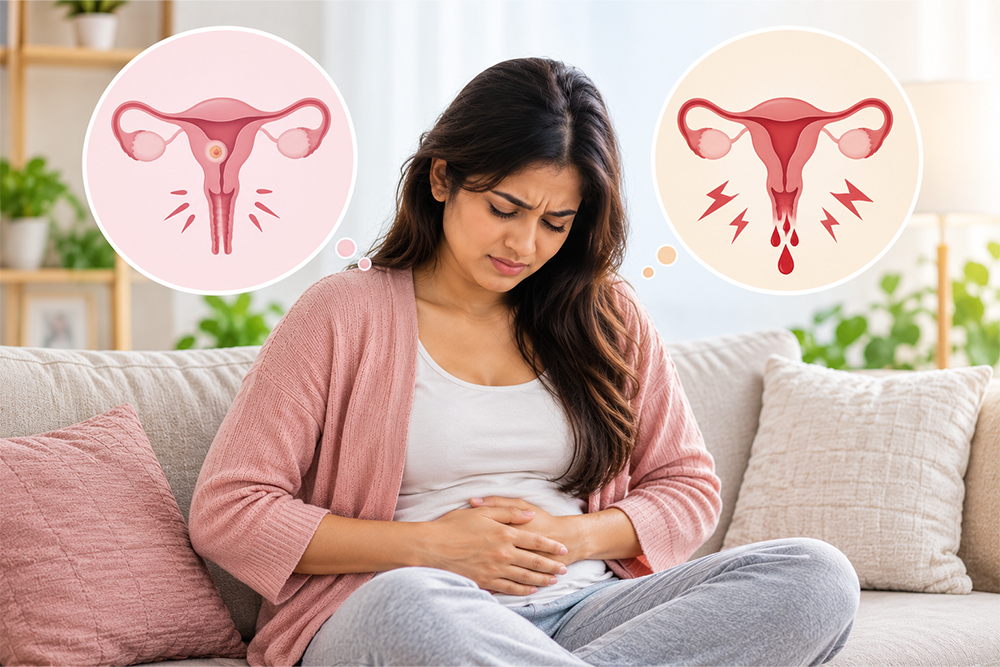
Implantation Cramps vs Period Cramps: What to Know
A little cramping around the time your period is due can leave you wondering what exactly is going on. Is your period about to start? Could it be pregnancy? And what about that tiny bit of spotting you noticed?
It can be difficult to tell because implantation cramps and period cramps can feel quite similar. There isn’t a particular kind of pain that can tell you, with certainty, that you are pregnant. But understanding what is happening in your body can make the waiting a little less confusing.
What Are Implantation Cramps?
Implantation happens when a fertilised egg attaches itself to the inner lining of the uterus. It takes place after fertilisation and several days after ovulation.
Some women may notice mild cramping around this time. It can feel like a slight pulling, twinge or dull ache in the lower abdomen. Others don’t feel anything at all.
So, if you don’t have implantation cramps, that doesn’t mean you aren’t pregnant. And if you do have them, it doesn’t necessarily mean that you are.
Why Do Periods Cause Cramps?
Period cramps have a different reason. When menstruation begins, the uterus contracts to help shed its lining.
Natural substances called prostaglandins are involved in this process. Higher levels can lead to stronger contractions and, for some women, more painful periods.
This is why Prostaglandins and uterine contractions are closely linked to menstrual cramps.
Period pain can start just before bleeding or around the first few days of the period. For some, it is barely noticeable. For others, it can make getting through a normal workday quite difficult.
Implantation Cramps And Period Cramps: Is There A Difference?
There can be differences, but they aren’t reliable enough to diagnose pregnancy.
Implantation related cramps, when they occur, are generally mild and may come and go. Period cramps can be stronger and may continue for a day or more.
Timing can also be different. Implantation happens before the expected period, while menstrual cramps generally appear shortly before or as the period begins.
The problem is that everyone’s experience is different. A mild cramp before a period could simply be a mild period cramp. There is no way to know for sure just from the sensation.
What About Spotting?
This is where things can get even more confusing.
Some women notice light spotting around the time implantation may occur. But spotting can happen for several other reasons too, so it shouldn’t automatically be taken as a sign of pregnancy.
When looking at Implantation bleeding vs light period, the amount and duration may be different. Implantation related spotting, when it happens, is generally light, while a period usually develops into a more consistent flow.
Heavy bleeding isn’t something that should simply be labelled as implantation bleeding. If the bleeding is unusual or accompanied by significant pain, speak to a doctor.
Could Cramping Mean You Are Pregnant?
Possibly, but not necessarily.
Early pregnancy can bring several changes. Some women notice breast tenderness, tiredness, nausea, more frequent urination or changes in appetite. Others don’t notice much at all in the beginning.
The trouble is that many Early pregnancy signs can also happen before a period. Breast tenderness and tiredness, for example, aren’t exclusive to pregnancy.
So rather than trying to read every symptom, it is better to look at the bigger picture and, when appropriate, take a pregnancy test.
What Does hCG Have To Do With It?
Once implantation has taken place, the developing pregnancy starts producing a hormone called hCG.
This hormone eventually becomes detectable in urine, which is what home pregnancy tests look for. Blood tests can also measure it.
The timing matters. If you test very early, there may not be enough hCG in your urine for the test to detect it. That is one reason someone can have pregnancy symptoms and still get a negative test.
As hCG hormone levels rise during early pregnancy, the hormone becomes easier to detect.
What Is hCG?
You may have seen the term hCG on a pregnancy test or in a lab report.
Human chorionic gonadotropin is a hormone produced during pregnancy. Its levels rise during the early stages and can be detected through blood or urine tests.
This is much more useful for confirming pregnancy than trying to decide whether a particular cramp “feels like” implantation.
Can Tracking Your Temperature Help?
Some women track their temperature every morning to understand their menstrual cycle and identify changes around ovulation.
After ovulation, progesterone causes a small rise in body temperature. If pregnancy occurs, the temperature may stay elevated for longer than it normally would.
Tracking Basal body temperature (BBT) can give you clues about your cycle, but it cannot confirm pregnancy. A pregnancy test is still the more dependable option.
What Happens Inside The Uterus?
Every month, the uterus prepares for the possibility of pregnancy. Its inner lining gradually becomes thicker after ovulation.
This is the Endometrium lining, and it provides the surface where a fertilised egg can implant if pregnancy occurs
If pregnancy doesn’t happen, hormone levels change and the lining is shed during the next menstrual period. It is this process that gives you your period.
When Should You Take A Pregnancy Test?
If your period is due and pregnancy is possible, a pregnancy test is more useful than trying to interpret cramps or spotting.
Testing around the time your period is expected can give a more reliable result. If the test is negative but your period still doesn’t arrive, you may need to test again after a few days
If you are unsure about the result or your symptoms, a gynaecologist can help you understand what is happening.
When Should You Not Ignore The Pain?
Mild cramping is common around both menstruation and early pregnancy. Severe pain is a different matter.
Talk to a doctor if you have:
- Severe or increasing abdominal or pelvic pain
- Pain that is mainly on one side
- Heavy bleeding
- Dizziness or fainting
- Shoulder pain along with abdominal pain or bleeding
- Significant pain after getting a positive pregnancy test
These symptoms can sometimes point to problems that need prompt medical attention, including ectopic pregnancy.
Don't Try To Decode Every Cramp
It is completely understandable to look for clues when you are waiting to find out whether you are pregnant. But cramps, spotting and other early symptoms can overlap so much that they can leave you more confused than reassured.
If your period is late and pregnancy is possible, take a test at the right time. And if something feels unusual, particularly severe pain or heavy bleeding, don’t try to explain it away as implantation.
At Gomti Thapar Hospital, a gynaecology consultation can help you understand changes in your menstrual cycle, early pregnancy symptoms or concerns about pain and bleeding. Sometimes, getting a clear answer is better than spending days trying to guess what every symptom means.
Frequently Asked Questions
Yes. Both can cause mild discomfort in the lower abdomen, which is why it isn't always possible to tell them apart based on the feeling alone.
If they occur, implantation related cramps are generally mild and short lived. Persistent or severe pain should not automatically be attributed to implantation.
No. Many women do not notice any cramping around implantation.
Yes. Not everyone experiences spotting during implantation, and the absence of bleeding does not rule out pregnancy.
Yes. But cramps alone cannot confirm pregnancy, especially when the test is taken very early.
A pregnancy test taken at the appropriate time is much more reliable than trying to identify pregnancy from cramps or other symptoms. If there is uncertainty, a gynaecologist can advise you on the next step.