

Infection After HSG: Signs, Symptoms, and When to Seek Care
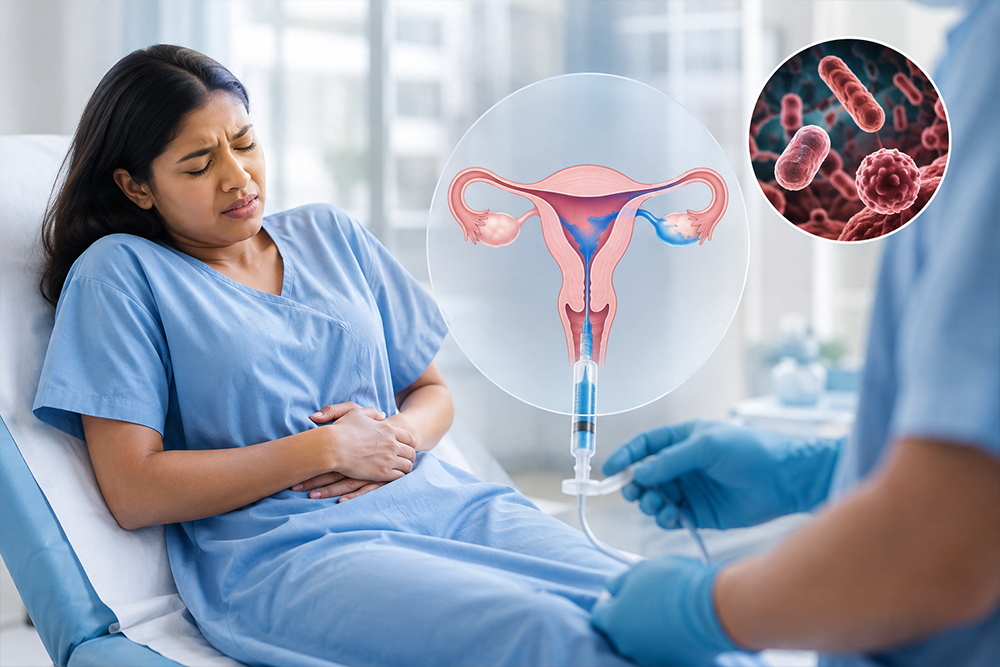
If you’ve recently had an HSG, chances are you’ve already Googled at least one thing afterwards.
“Is cramping normal?”
“How long will the spotting last?”
“Should I be worried if I’m still uncomfortable tomorrow?”
“How long will the spotting last?”
“Should I be worried if I’m still uncomfortable tomorrow?”
The truth is, most women recover without any problems. Mild cramps and light spotting are fairly common after the procedure. But if the pain starts getting worse instead of better, or you suddenly develop a fever, your body could be telling you something different.
Although uncommon, an infection after hysterosalpingography is a recognised complication. Knowing the warning signs can help you seek treatment early and avoid unnecessary complications.
Understanding an HSG
When couples are trying to conceive, one of the first questions doctors ask is whether the fallopian tubes are open. That’s where an HSG comes in.
An HSG, or hysterosalpingography, is a fertility test for women that helps doctors look at the uterus and fallopian tubes using a special dye and X-ray images. If the dye flows freely, it’s usually a sign that the tubes are open. If it doesn’t, it may point towards a blockage or another condition that needs further evaluation.
The procedure itself is usually completed within 15 to 30 minutes, and most women return home shortly afterwards.
So, What's Considered Normal Afterwards?
This is probably the question every woman asks before leaving the hospital.
A little cramping? That’s expected.
Light spotting for a day or two? Also normal.
Some women even feel slightly tired after the procedure, especially if they were anxious beforehand.
Some women even feel slightly tired after the procedure, especially if they were anxious beforehand.
These symptoms usually settle on their own. In fact, many women don’t need anything more than a little rest and the medicines recommended by their doctor.
When Should You Start Paying Attention?
Recovery should gradually get better, not worse.
If you notice the pain becoming more intense after the first day, develop a fever, or notice a foul smelling discharge, don’t assume it’s just part of healing. Those changes deserve medical attention because they could suggest an infection after hysterosalpingography.
Other warning signs include:
- Fever or chills
- Increasing pelvic pain
- Heavy vaginal bleeding
- Foul smelling vaginal discharge
- Persistent nausea or vomiting
- Feeling unusually weak or dizzy
Most women never experience these symptoms. But if you do, it’s always safer to contact your doctor rather than wait for them to settle on their own.
Why Does an Infection Happen After an HSG?
This is something many women ask, and it’s a fair question.
The HSG itself doesn’t “cause” an infection. What can happen, in rare cases, is that bacteria already present in the vagina or cervix may travel into the uterus during the procedure. If there’s an existing but undetected pelvic infection, the chances may be slightly higher.
The reassuring part is that this complication is uncommon. When an HSG is performed under sterile conditions and the right precautions are taken, most women recover without any infection at all.
How Do Doctors Know if It's an Infection?
Not every cramp after an HSG needs another hospital visit. But if your symptoms are getting worse instead of better, your doctor may want to rule out an infection and protect your women’s reproductive health.
The first step is usually a conversation. Your doctor will ask when the symptoms started, whether you have a fever, how severe the pain is and whether the vaginal discharge has changed.
Depending on what they find, they may recommend:
- A pelvic examination
- Blood tests to look for signs of infection
- Vaginal or cervical swabs, if required
- An ultrasound to rule out other pelvic conditions
Most women don’t need every test. The evaluation depends on your symptoms and clinical findings.
What Happens if an Infection is Confirmed?
The good news is that most infections can be treated successfully when they’re identified early.
The treatment usually involves antibiotics, and your doctor may also recommend pain relief medicines, rest and plenty of fluids. If the infection is more severe or doesn’t improve with oral medicines, hospital admission and intravenous antibiotics may be necessary. Fortunately, this is uncommon.
The important thing is not to delay seeking medical care. Waiting for symptoms to “settle on their own” can sometimes allow the infection to worsen.
Can an Infection Be Prevented?
No medical procedure is completely risk free, but there are steps that help reduce the chances of developing an infection after hysterosalpingography.
These include:
- Scheduling the HSG at the right time in your menstrual cycle
- Informing your doctor about any previous pelvic infections
- Following all instructions before and after the procedure
- Reporting unusual symptoms as soon as they appear
- Taking prescribed medicines exactly as advised
Most importantly, choose a hospital where fertility procedures are performed under strict safety and infection control protocols.
When Should You Call Your Doctor Immediately?
Some symptoms shouldn’t be watched at home.
Contact your doctor without delay if you develop:
Contact your doctor without delay if you develop:
- Fever above 38°C
- Severe pelvic pain that keeps increasing
- Heavy vaginal bleeding
- Foul smelling discharge
- Persistent vomiting
- Dizziness or fainting
- Symptoms that continue to worsen after the first day
It’s always better to make one unnecessary phone call than ignore a symptom that needs treatment.
An HSG is an important investigation that has helped many couples understand the reason behind infertility. While an infection afterwards is uncommon, knowing what’s normal and what isn’t can make recovery much less stressful.
Mild cramps and light spotting are usually expected. But if your symptoms become worse instead of better, don’t wait or second guess yourself. A timely medical review can prevent complications and help you recover safely.
At Gomti Thapar Hospital, female infertility treatment in Moga begins with careful evaluation, compassionate care and evidence based treatment. If you have concerns after an HSG or are planning a fertility test, consult our experienced fertility specialist for personalised guidance
Frequently Asked Questions
An infection after hysterosalpingography is uncommon. Most women recover with only mild cramping or spotting that settles within a day or two.
Mild cramps and light spotting usually improve within 24 to 48 hours. Symptoms that become worse instead of improving should be evaluated by a doctor.
Not necessarily. Antibiotics are usually prescribed only when there's a higher risk of infection or if an infection develops after the procedure.
No. An HSG is a diagnostic fertility test for women and does not reduce fertility. In some cases, pregnancy rates may even improve in the months following the procedure.
Seek medical advice if you develop fever, severe pelvic pain, heavy bleeding, foul smelling discharge or persistent vomiting after the procedure.
If you have concerns after an HSG or are looking for female infertility treatment in Moga, consult our experienced fertility specialist at Gomti Thapar Hospital for comprehensive fertility care.
This content is medically reviewed by:
Dr. Neelu Koura
Director – Department of Obstetrics, Gynaecology & Infertility
Gomti Thapar Hospital, Moga