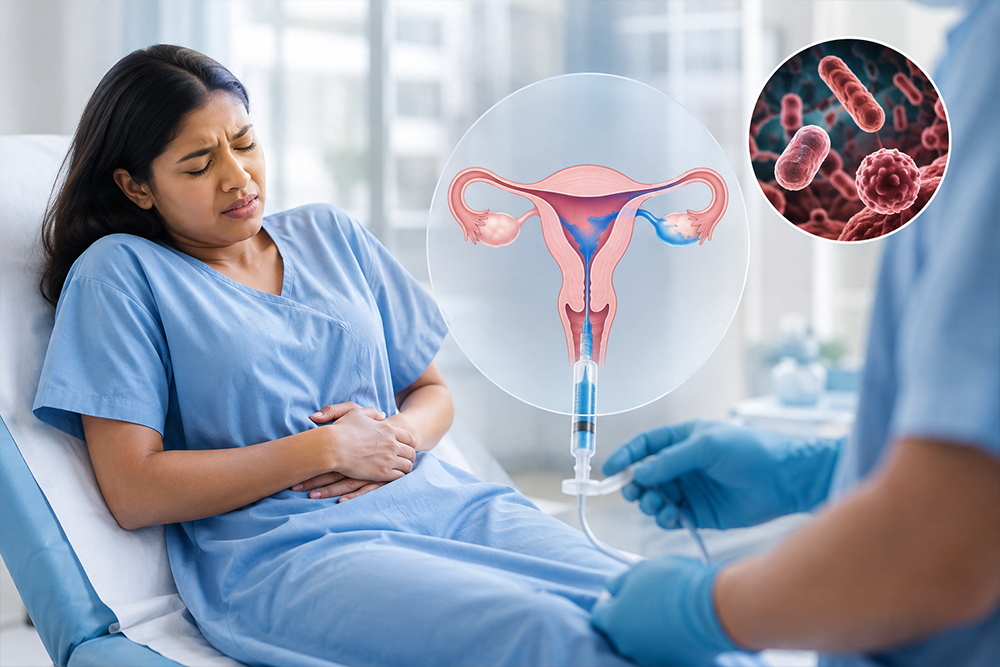
Infection After HSG: Signs, Symptoms, and When to Seek Care If you’ve recently had an HSG, chances are you’ve already Googled at least one thing afterwards.”Is cramping normal?” “How long will the spotting last?” “Should I be worried if I’m still uncomfortable tomorrow?”The truth is, most women recover without any problems. Mild cramps and light spotting are fairly common after the procedure. But if the pain starts getting worse instead of better, or you suddenly develop a fever, your body could be telling you something different.Although uncommon, an infection after hysterosalpingography is a recognised complication. Knowing the warning signs can help you seek treatment early and avoid unnecessary complications. Understanding an HSG When couples are trying to conceive, one of the first questions doctors ask is whether the fallopian tubes are open. That’s where an HSG comes in.An HSG, or hysterosalpingography, is a fertility test for women that helps doctors look at the uterus and fallopian tubes using a special dye and X-ray images. If the dye flows freely, it’s usually a sign that the tubes are open. If it doesn’t, it may point towards a blockage or another condition that needs further evaluation.The procedure itself is usually completed within 15 to 30 minutes, and most women return home shortly afterwards. So, What’s Considered Normal Afterwards? This is probably the question every woman asks before leaving the hospital. A little cramping? That’s expected. Light spotting for a day or two? Also normal. Some women even feel slightly tired after the procedure, especially if they were anxious beforehand. These symptoms usually settle on their own. In fact, many women don’t need anything more than a little rest and the medicines recommended by their doctor. When Should You Start Paying Attention? Recovery should gradually get better, not worse. If you notice the pain becoming more intense after the first day, develop a fever, or notice a foul smelling discharge, don’t assume it’s just part of healing. Those changes deserve medical attention because they could suggest an infection after hysterosalpingography. Other warning signs include: Fever or chills Increasing pelvic pain Heavy vaginal bleeding Foul smelling vaginal discharge Persistent nausea or vomiting Feeling unusually weak or dizzy Most women never experience these symptoms. But if you do, it’s always safer to contact your doctor rather than wait for them to settle on their own. Why Does an Infection Happen After an HSG? This is something many women ask, and it’s a fair question. The HSG itself doesn’t “cause” an infection. What can happen, in rare cases, is that bacteria already present in the vagina or cervix may travel into the uterus during the procedure. If there’s an existing but undetected pelvic infection, the chances may be slightly higher. The reassuring part is that this complication is uncommon. When an HSG is performed under sterile conditions and the right precautions are taken, most women recover without any infection at all. How Do Doctors Know if It’s an Infection? Not every cramp after an HSG needs another hospital visit. But if your symptoms are getting worse instead of better, your doctor may want to rule out an infection and protect your women’s reproductive health.The first step is usually a conversation. Your doctor will ask when the symptoms started, whether you have a fever, how severe the pain is and whether the vaginal discharge has changed.Depending on what they find, they may recommend: A pelvic examination Blood tests to look for signs of infection Vaginal or cervical swabs, if required An ultrasound to rule out other pelvic conditions Most women don’t need every test. The evaluation depends on your symptoms and clinical findings. What Happens if an Infection is Confirmed? The good news is that most infections can be treated successfully when they’re identified early.The treatment usually involves antibiotics, and your doctor may also recommend pain relief medicines, rest and plenty of fluids. If the infection is more severe or doesn’t improve with oral medicines, hospital admission and intravenous antibiotics may be necessary. Fortunately, this is uncommon. The important thing is not to delay seeking medical care. Waiting for symptoms to “settle on their own” can sometimes allow the infection to worsen. Can an Infection Be Prevented? No medical procedure is completely risk free, but there are steps that help reduce the chances of developing an infection after hysterosalpingography.These include: Scheduling the HSG at the right time in your menstrual cycle Informing your doctor about any previous pelvic infections Following all instructions before and after the procedure Reporting unusual symptoms as soon as they appear Taking prescribed medicines exactly as advised Most importantly, choose a hospital where fertility procedures are performed under strict safety and infection control protocols. When Should You Call Your Doctor Immediately? Some symptoms shouldn’t be watched at home. Contact your doctor without delay if you develop: Fever above 38°C Severe pelvic pain that keeps increasing Heavy vaginal bleeding Foul smelling discharge Persistent vomiting Dizziness or fainting Symptoms that continue to worsen after the first day It’s always better to make one unnecessary phone call than ignore a symptom that needs treatment.An HSG is an important investigation that has helped many couples understand the reason behind infertility. While an infection afterwards is uncommon, knowing what’s normal and what isn’t can make recovery much less stressful. Mild cramps and light spotting are usually expected. But if your symptoms become worse instead of better, don’t wait or second guess yourself. A timely medical review can prevent complications and help you recover safely. At Gomti Thapar Hospital, female infertility treatment in Moga begins with careful evaluation, compassionate care and evidence based treatment. If you have concerns after an HSG or are planning a fertility test, consult our experienced fertility specialist for personalised guidance Frequently Asked Questions 1. How common is an infection after an HSG? An infection after hysterosalpingography is uncommon. Most women recover with only mild cramping or spotting that settles within a day or two. 2. How long do HSG side effects usually last?… Continue reading Infection After HSG: Signs, Symptoms, and When to Seek Care


Category: Obstetrics · Gynaecology
The Impact of Environmental Pollutants on Male Sperm Quality and Fertility

The Impact of Environmental Pollutants on Male Sperm Quality and Fertility The environment around us may be influencing fertility in ways many people never consider When people talk about fertility, the conversation usually revolves around age, lifestyle, diet, stress, or underlying medical conditions. What often gets left out is the environment we live in every day. The air we breathe, the chemicals we come into contact with, and even some products we use regularly can have an effect on male reproductive health.For years, fertility specialists focused mainly on biological and lifestyle causes of infertility. While those factors remain important, growing research suggests that environmental exposure may also contribute to reproductive challenges in some men. This does not mean pollution is the sole reason for infertility, but it is becoming a factor that cannot be ignored. The Modern World Comes with New Risks Think about how different life is today compared to a few decades ago. More vehicles on the roads, more industrial activity, more processed products, and greater exposure to chemicals in daily life. Many of these changes have improved convenience, but they have also increased our contact with substances that may affect the body over time.Researchers studying environmental toxins and sperm health have examined pollutants such as pesticides, heavy metals, industrial chemicals, vehicle emissions, and certain compounds found in plastics. While the level of risk varies from person to person, long term exposure has raised concerns among fertility experts. How Pollutants May Affect Sperm Sperm production is a continuous process. Healthy sperm development depends on hormones, good blood supply, proper testicular function, and overall health. When harmful substances enter the body repeatedly over long periods, they may interfere with some of these processes.In certain cases, specialists investigating fertility problems in men find that occupational exposure or environmental factors are worth considering alongside medical history and lifestyle habits. This is particularly relevant for individuals who work in agriculture, manufacturing, chemical industries, painting, welding, or other professions involving regular chemical exposure.Scientists have also explored how some pollutants increase oxidative stress in the body. Oxidative stress occurs when harmful molecules outnumber the body’s natural defenses. Over time, this may affect sperm count, movement, shape, and even genetic quality. Who Might Be at Greater Risk? Not everyone exposed to pollution develops fertility issues. However, certain groups may face higher levels of exposure than others.These may include: Agricultural workers handling pesticides Factory and industrial workers Men exposed to heavy metals at work Individuals living near highly polluted environments Workers frequently exposed to solvents and chemicals Small Everyday Habits Matter Too Environmental exposure is not limited to workplaces. Everyday choices can also contribute to overall chemical exposure levels.For example, frequent smoking, excessive alcohol consumption, poor dietary habits, and prolonged exposure to certain chemicals can place additional stress on the body’s reproductive system. While no single habit is usually responsible for infertility, multiple factors acting together may affect reproductive health over time. This is why fertility evaluations often look beyond laboratory reports and explore a person’s overall lifestyle and environment. When Should a Man Consider Fertility Evaluation? Many men assume fertility testing is only necessary after years of trying to conceive. In reality, earlier evaluation can sometimes identify concerns before they become larger problems.At Gomti Thapar Hospital, male fertility treatment in Moga often begins with a detailed understanding of the individual’s medical history, lifestyle, occupation, and reproductive goals. These discussions can sometimes reveal factors that may otherwise be overlooked.If a couple has been trying to conceive without success, or if previous test reports have shown abnormalities, seeking professional guidance may help clarify the situation. Looking Beyond the Test Report A semen analysis provides valuable information, but it is only one piece of the puzzle. Hormonal balance, medical conditions, lifestyle habits, environmental exposure, and overall health can all influence fertility outcomes.At Gomti Thapar Hospital, male sperm treatment in Moga is tailored to the underlying cause rather than relying on a one size fits all approach. Specialists assess multiple factors before recommending treatment options that are appropriate for the individual.In many situations, addressing lifestyle factors and reducing unnecessary exposure to harmful substances may form an important part of the overall treatment plan. Awareness Is the First Step Environmental pollutants are not always visible, and their effects are not always immediate. That is what makes them difficult to recognize. While it is impossible to eliminate every exposure, being aware of potential risks can help people make informed choices.Simple steps such as using protective equipment at work, avoiding unnecessary chemical exposure, maintaining a healthy lifestyle, and seeking medical advice when needed can contribute positively to fertility and overall well-being. Frequently Asked Questions 1.Can pollution really affect sperm quality? Research suggests that long term exposure to certain pollutants may affect sperm count, movement, and overall quality. The extent of the impact varies between individuals 2. Which environmental pollutants are most commonly linked to fertility issues? Pesticides, heavy metals, industrial chemicals, air pollution, and certain plastic related compounds are among the substances most frequently studied. 3. Can sperm quality improve if exposure is reduced? In some cases, improvements may occur after reducing exposure to harmful substances and adopting healthier lifestyle habits. The outcome depends on the underlying cause and individual health factors. 4. Should I be concerned if I work around chemicals? Not necessarily, but men with regular occupational exposure may benefit from discussing their work environment with a fertility specialist, particularly if conception has been difficult. 5. How do doctors evaluate male fertility? Evaluation typically includes a detailed medical history, physical examination, hormonal assessment, and semen analysis. At Gomti Thapar Hospital, male fertility treatment in Moga begins with understanding the complete picture, including lifestyle factors, medical conditions, and reproductive history. Depending on the findings, additional investigations may be recommended to identify the underlying cause and guide appropriate treatment. 6. When should I seek medical advice for fertility concerns? If pregnancy has not occurred after a reasonable period of trying, or if there are known risk factors affecting fertility, a professional… Continue reading The Impact of Environmental Pollutants on Male Sperm Quality and Fertility
When to See a Gynecologist After a Positive Pregnancy Test

When to See a Gynecologist After a Positive Pregnancy Test You saw two lines. Take a breath first Prostate-related health problems are common in men above the age of 50 and should never be ignored. From benign prostate enlargement to serious conditions like prostate cancer, early diagnosis and expert care are essential. If you are looking for reliable urology hospitals in Moga, Punjab, Gomti Thapar Hospital offers comprehensive prostate care with experienced specialists and advanced facilities. Do you need to visit the hospital immediately In most normal situations, you can wait a few days and book a proper appointment. The ideal time to see a gynaecologist is usually around 6 to 8 weeks from your last menstrual period. Going too early may not show much on scan and can create unnecessary anxiety. Or you can visit our gynaecologist in Moga at Gomti Thapar Hospital. Here, we will guide you with compassion and dignity. Situations where you should not wait There are some warning signs that should never be ignored. Even early pregnancy needs medical attention if symptoms are unusual. Severe lower abdominal pain Heavy bleeding Dizziness or fainting Shoulder pain High fever Known as the best gynecology hospital in Moga, we understand that early pregnancy can sometimes turn serious without much warning. That is why we encourage women not to ignore these symptoms. Quick evaluation, timely scans, and immediate medical support can prevent complications and protect both mother and baby. What happens in the first visit The first appointment is usually simple and more discussion based. Your doctor will ask about your last period, previous medical history, and any medicines you are taking. Basic blood tests may be advised. An early scan might be done depending on how many weeks it has been since your Positive Pregnancy Test. Why early care still matters Even if you feel completely fine, registering your pregnancy early helps track important health markers. A qualified gynaecologist will check things like thyroid levels, blood group, and sugar levels, which can quietly affect pregnancy if unnoticed. Do not rely only on internet advice After confirming pregnancy, it is very common to start searching everything online. One article says something is normal. Another says it is dangerous. Forums are full of different experiences and opinions. The problem is, those experiences belong to someone else’s body, not yours. The internet cannot see your reports. It does not know your medical history. It does not know if you have thyroid issues, irregular cycles, previous miscarriages, or other health conditions. That is why depending only on online information often increases stress instead of reducing it. Getting proper medical advice gives clarity. A doctor examines you, looks at your reports, understands your background, and then guides you accordingly. That kind of personalised care cannot be replaced by articles or discussion forums. A Positive Pregnancy Test is just the beginning. There is no need to panic and run immediately, but do not keep postponing the visit either. Seeing a doctor at the right time and staying regular with check-ups simply makes things clearer and safer as the months go by.
How to Handle Health Risks After a Pregnancy Loss?

How to Handle Health Risks After a Pregnancy Loss? Managing Health Risks in Pregnancies Following a Miscarriage Experiencing a miscarriage is an emotionally challenging event for any woman, but it is important to remember that the possibility of pregnancy after miscarriage is not only real but also attainable with proper care and guidance. At Gomti Thapar Hospital, recognized as the best gynecology hospital in Punjab, our expert team of gynecologists is dedicated to supporting women through this sensitive journey, offering the care and confidence needed to embrace motherhood once again. Understanding Pregnancy After Miscarriage A miscarriage, while emotionally distressing, is not an uncommon experience. For many women, the next pregnancy after miscarriage can be a path filled with hope and new beginnings. However, understanding the risks, timing, and necessary medical care is vital to ensure a healthy pregnancy. Factors to Consider Timing: Medical experts often recommend waiting for one to three menstrual cycles before trying again, allowing the body to heal and prepare. Physical Health: Addressing any underlying conditions, such as hormonal imbalances or uterine abnormalities, is crucial. Emotional Well-being: Mental health plays a significant role in recovery and readiness for a new pregnancy. Potential Risks in Pregnancies After a Miscarriage While most women go on to have healthy pregnancies after a miscarriage, it’s important to be aware of the potential risks involved: Recurrent Miscarriages: Experiencing one miscarriage slightly increases the risk of another. Identifying underlying causes, such as genetic abnormalities or hormonal imbalances, can help mitigate this risk. Preterm Labor: Women who have had a miscarriage, particularly in the second trimester, may face an increased risk of preterm labor in subsequent pregnancies. Placental Complications: Conditions like placenta previa or placental abruption can sometimes occur in pregnancies following a miscarriage. Proper monitoring can help identify and address these issues early. Infections: Incomplete healing or residual tissue from the previous miscarriage can increase the risk of uterine infections, which may affect future pregnancies. Emotional Stress: Anxiety and fear about the possibility of another miscarriage can impact mental health, which is crucial for a healthy pregnancy. Pre-existing Medical Conditions: Conditions such as diabetes, hypertension, or thyroid disorders can pose risks for the next pregnancy if not managed properly. Managing Health Risks To minimize health risks, it is essential to adopt a proactive approach: Preconception Counseling: Consult the best gynecologist in Punjab at Gomti Thapar Hospital to assess your physical and emotional readiness. Nutritional Support: Follow a balanced diet rich in essential nutrients to prepare your body for a healthy pregnancy. Regular Check-ups: Frequent consultations with your gynecologist ensure early detection and management of any complications. Lifestyle Modifications: Avoid smoking, alcohol, and stress, which can impact the health of your next pregnancy. Why Choose Gomti Thapar Hospital? As a leading hospital for gynecology in Punjab, Gomti Thapar Hospital is equipped with latest facilities and a compassionate team dedicated to providing personalized care. From preconception counseling to postnatal support, we are with you at every step of your journey. Our Key Services Include Comprehensive fertility evaluations Advanced prenatal and postnatal care High-risk pregnancy management Emotional support and counseling The journey to motherhood after a miscarriage can be daunting, but with the right care and support, it is entirely possible to have a healthy pregnancy. At Gomti Thapar Hospital, we are committed to turning your hopes into reality. If you are planning your next pregnancy after miscarriage, let us guide you toward a safe and fulfilling experience. Contact Gomti Thapar Hospital, the trusted name in gynecology care in Punjab, and take the first step toward a brighter tomorrow.